

What Is Zero-Click Search and How to Optimize Your Content for It?
Author: KUMO Studio
Zero-Click Search is a type of search result where you find the information directly on the SERP. Instead of navigating you to another page, Zero-Click Search will provide you a snippet, summary, or AI overview as the result of your queries, so you don’t need to click any link at all. Curious how it works and how to get your content featured in Zero-Click Search results? Let's break it down!
Introduction to Zero-Click Search
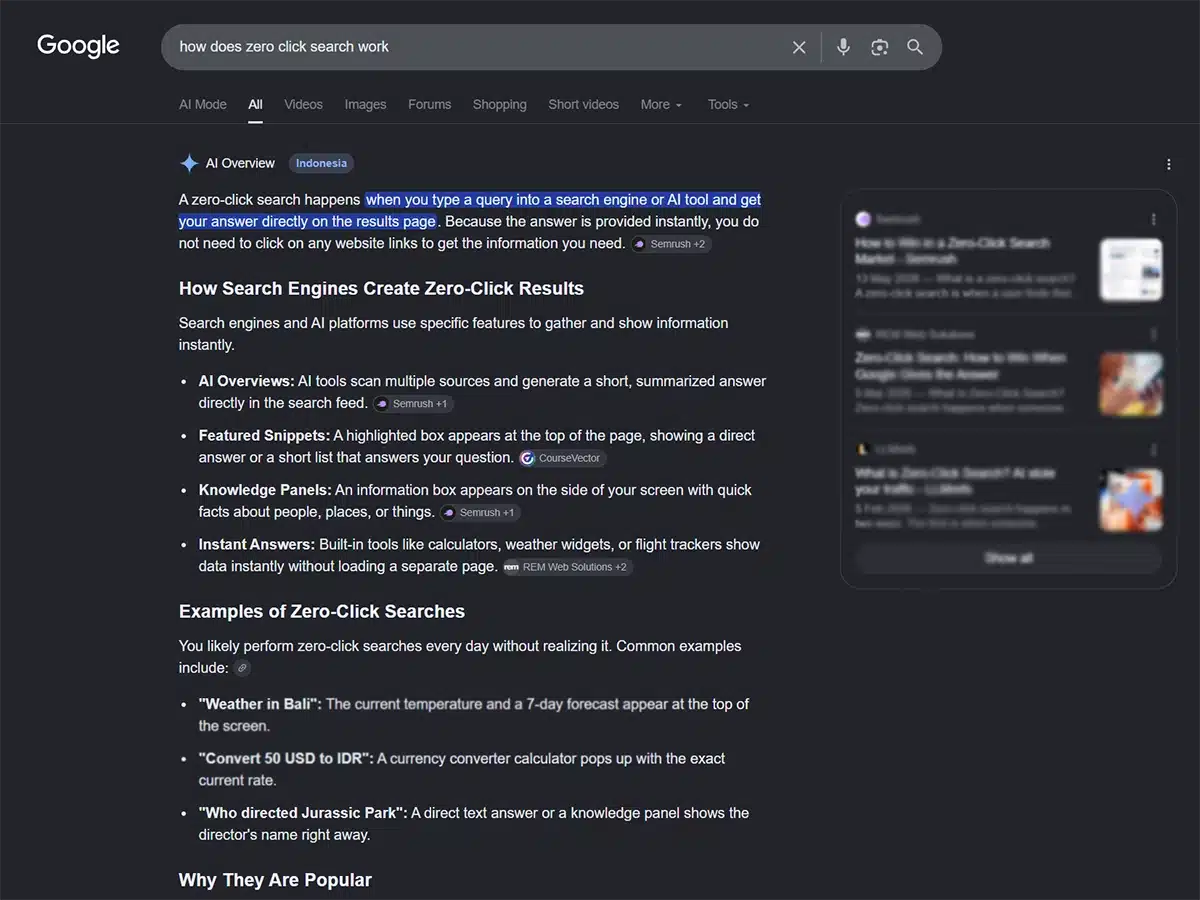
Have you ever noticed that currently the top section of the search engine result page is no longer a list of links to other websites? And now you don’t need to open a link leading to another website to find information. Instead, you just simply read the AI-summary at that top section. Turns out you have utilized one of the Zero-Click Search features!
Despite AI-summaries recently gaining their trend alongside other AI tools, Zero-Click Search is actually not a sudden shift. Perhaps you are familiar with People Also Ask, which feels like it's been there since day one you have used a search engine.
Starting with Knowledge Panels in 2012, which showed you a picture and personal facts about your favorite public figure, Zero-Click Search had begun reducing clicks to Wikipedia pages back then. It was followed by Featured Snippets in 2014, where people began to expect an instant answer for their simple factual queries.
As users, these constant changes have made them expect a faster and more effortless process in getting answers. But every convenience for the users comes with a trade-off for someone else. In this case, that someone is could be you if you run a website or manage a brand's SEO Strategy.
Why Zero-Click Searches Matter for Marketers and SEO
These features are not only changing the way you find information as a user, but also how good ranking in SEO actually means as a marketer. As you know, with conventional SEO, a website at the top of the SERP will get more clicks.
Now, since more spaces get taken up by Zero-Click Search results, the first link gets pushed down, and it leads to fewer clicks and traffic. If you are a marketer, what will you do if users no longer click or bring traffic to your website because they feel informed enough with Zero-Click Search results? Will a “first rank” title still matter for you?
Traffic vs. Visibility
All the answers from the Zero-Click Search section are not merely curated from random websites. Believe it or not, search engines have their trusted websites to cite. And if your website is not showing up, they haven’t trusted you. Just yet!
One important point you need to highlight is the “trusted websites”. Do you think trusted websites are coming from a far-off, unknown page on SERP? They are mostly ranked on the first page of the SERP. So, even though high rank now no longer guarantees traffic, it gives your website a chance to get cited by the Zero-Click Search.
Once your website gets the ticket to show up in the top section of SERP as a Zero-Click Search, a low number of visitors will not be a problem anymore. Because a Zero-Click Result appearance means high visibility. Visibility, in turn, is often the first step towards everything else marketers care about.
But, if your website has already had a good rank, yet you are still wondering what’s best to get it cited, you'd better keep scrolling down! We would like to show you the new layer of SEO through Zero-Click Search, and how to win it.
How to Optimize Content for Zero-Click Search
Basically, winning a space in Zero-Click Search Results is about making your content easy to extract, trust, and cite. You have to make sure your content is well-structured so the algorithm can understand it at a glance. Let’s go step by step on how to make it work!
Implementing Schema Markup
Schema Markup is a code to tell search engines what your content actually is. Though they don’t guarantee a Zero-Click Search spot, implementing Schema Markup in your website will make it easier to trust and cite, because search engines no longer need to guess what your page is about in the first place.
You’ve probably seen it, some search results contain star ratings and prices when you search for a service, preparation time under recipe content, or other details like business hours, event dates, or author name. Those are a few properties of Schema Markup. Schema Markup is a label to give an explicit clue for search engines about the entities on your page like a review, event, or local business. As of 2026, there are exactly 823 Schema Markup types to label your content, and publicly accessible on its official website. But for Zero-Click Search, you can start with LocalBusiness, FAQ, HowTo, and Organization.
Let's say, you want to optimize your step by step content about keyword research, one step you can take is to implement HowTo code on your page, and there will be a chance that your tips show up directly on the SERP as numbered steps.
Zero-Click Search Formats
If you want search engines to trust your content, format matters as much as the information itself. You have to know what actually triggers the Zero-Click Search result and how a certain format appears. Why are some queries answered as an AI Overview format when some others as Featured Snippets? You are about to find out!
1. AI Overviews
Wordstream stated that AI Overview has appeared in nearly half (55%) of Google searches.
This format appears when users input broader, critical, and explanation-needed questions. Sometimes, a single page cannot fully answer that query, so AI Overview should cite multiple sources to respond in a single answer.
To make it easier to apply on your website, let's walk through some examples for “broader, critical, and explanation-needed” questions, plus a quick tip on how your content should be designed.
- For “how does” questions like “how does zero-click search work?”, make sure you always open your first paragraph with a clear, one-sentence answer right away, then explain further below it.
- For long or multiple questions like “what is zero-click search and why does it matter?”, make sure your content answers the whole thing in one place, not separate the “why it matters” in different articles.
- For comparison questions like “Google Ads vs Meta Ads for small business”, make sure you use tables or clear side-by-side comparison lists so it looks obvious at a glance.
- For “why” questions like “why is my website traffic dropping?”, make sure you list the actual reason clearly as a numbered or bulleted list, so it’s easy to extract.
The clearer and more direct your answer, the easier it is for AI Overview to pull it in and cite you. But you have to remember one thing: you can’t win every query. So, pick your battles!
2. Featured Snippets
While AI Overview draws from multiple sites and generates its findings to answer complex questions, Featured Snippets go otherwise. When users input a simple question of “what is” or “how to”, Featured Snippets show the exact answer whether it is as text, list, or table, from one page only.
Since only one website will get featured, you have to play well to win this. You will not outrank whoever holds that spot if you only paraphrase it. You have to give a clearer explanation, more useful, updated data, or even a tighter format. Then, place them right after your query-like heading. And to match the query type, you may consider the answer format as the list below.
- For “what is” questions like “what is zero-click search?”, make sure your answer is only 40–60 words.
- For “how to” questions like “how to optimize content for zero-click search?”, make sure your answer is in numbered steps, and implement HowTo code as a Schema Markup.
- For comparison questions like “featured snippet vs AI Overview: what’s the difference?”, make sure you use tables or short comparison lists.
- For types of or best questions like “what are the types of zero-click search features?”, make sure you list the answer as a bullet.
As you can conclude, they require short and simple answers for short and simple questions. Because Featured Snippets only pull short, self-contained answers and skip long, winding explanations.
3. People Also Ask (PAA)
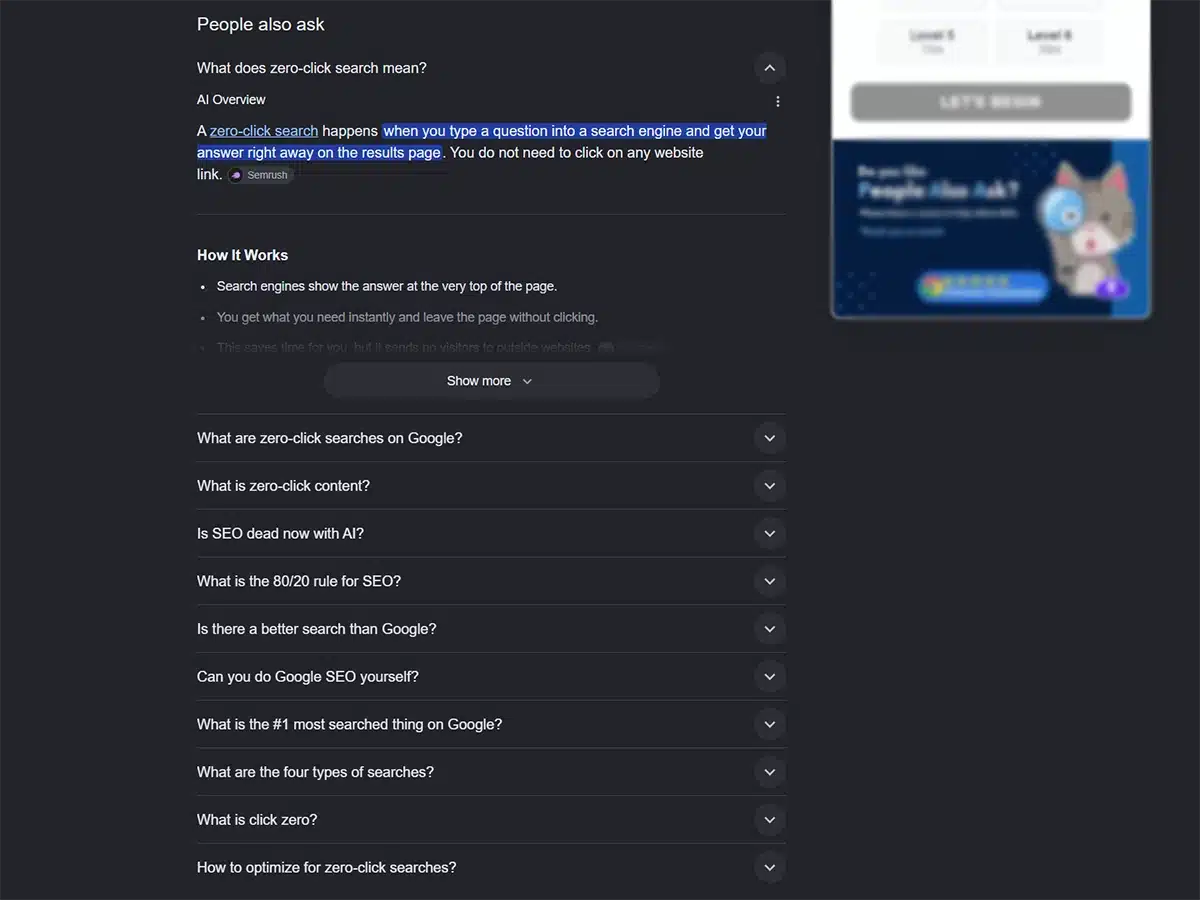
PAA typically appears across almost every query type as a strong signal of follow-up questions. If users type “what is zero-click search?” the PAA box will appear somewhere in the SERP with a few related questions such as “is zero-click search bad for seo?”, “how to win in a zero-click search market?”, and anything related to Zero-Click Search. Since PAA also rewards content that addresses a cluster of curiosity, not just the primary keyword, covering several related questions in one place will further strengthen your chances.
To get cited as PAA, the easiest step you can take is to look up the current PAA questions about the topic you are writing about, then use them as subheadings, and put your answer immediately as the first paragraph. To make it even easier for search engines to pull from your content, style these PAA subheadings as an FAQ section, and implement FAQ Schema Markup.
4. Knowledge Panels
Unlike the previous three formats, you can’t format your way to get cited into Knowledge Panels, because Knowledge Panels are more structured facts rather than blog-style content. Any searches related to specific, well-known entities such as brands, organizations, or public figures, will trigger Knowledge Panels.
The good news is, if you own a brand, it doesn’t need to be as famous as Apple Inc. to get recognized by Knowledge Panels as long as you have credibility. Then, how to build your brand’s credibility to get cited by Knowledge Panels?
Google usually pulls verified facts available on Wikipedia, Wikidata, Knowledge Graph, or your own site’s structured data. This is where Schema Markup makes its entry. You have to implement LocalBusiness or Organization code on your page, so Google can identify exactly who you are, your logo, official name, and social profiles.
Beyond Schema Markup, you have to keep your business name, description, and details identical across your website, Google Business Profile, and social platforms. This consistency will help Google recognize your brand without questioning the credibility. Once you have implemented Schema Markup and consistency across platforms, you can boost your credibility through external validation by reviews, news sites, or industry publications.
5. Local Pack
Local Pack happens when users type “best restaurant near me” on search engine, and their SERP shows some restaurant recommendations on a map with ratings, operational hours, and location for them to choose. Local Pack is really helpful for users who are not sure what they are looking for yet.
Now, if you want your business visible on Local Pack and bring the same experience as users found their “best restaurant”, the first step you have to do is complete your Google Business Profile. Once your business is registered and verified on Google Business Profile, it is eligible to appear whenever users search queries that match your business data.
Eligibility through Google Business Profile verification is one thing, but making your business visible on Local Pack requires another effort. Same as Knowledge Panels, you need to build credibility through LocalBusiness Schema Markup, consistency across platforms, and external validation. Not just eligible, this credibility will also boost your visibility position in the Local Pack.
Building Topical Authority
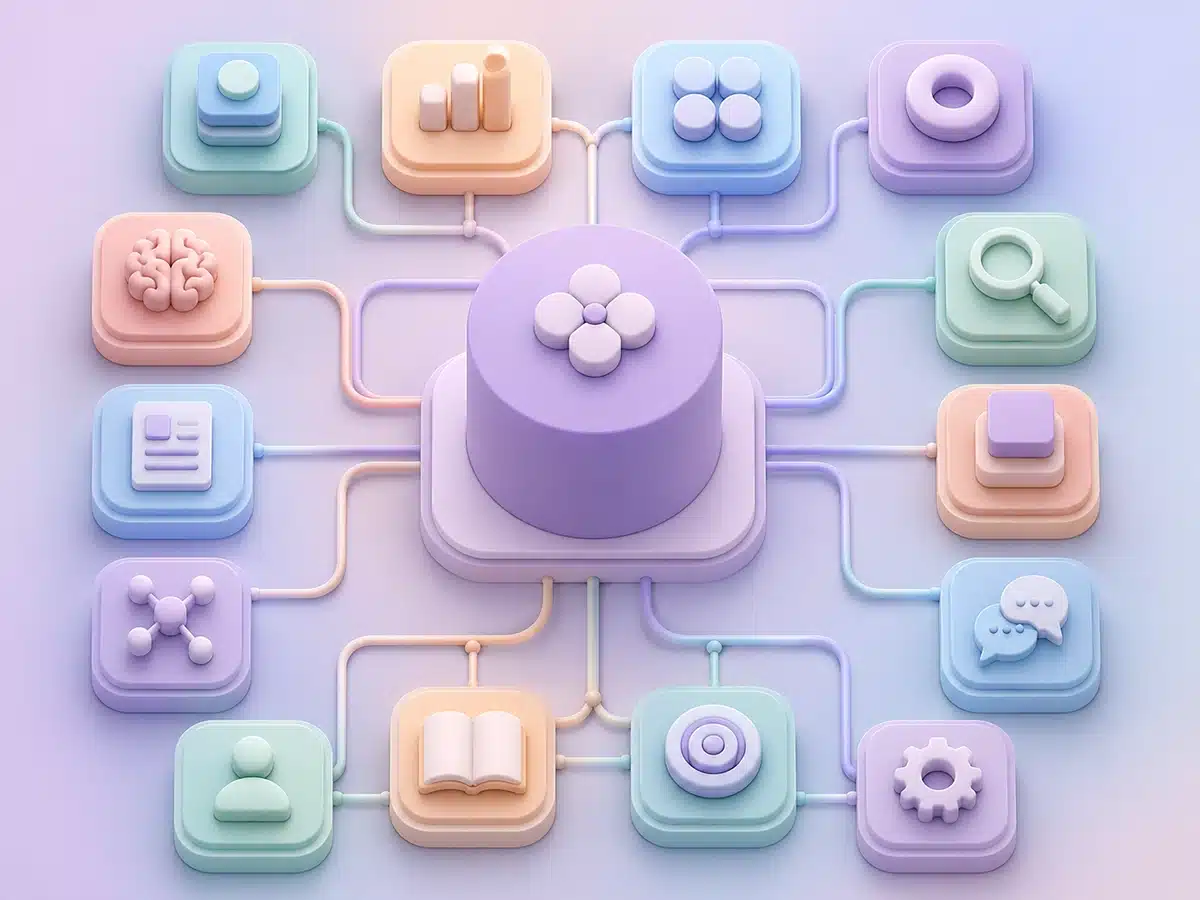
Imagine two websites writing identical content about “What is Zero-Click Search”, and answering the queries perfectly well. One website is a random website which writes about it once. The other has written dozens of interlinked articles covering SEO, search behavior, and content strategy as their core content. Which website do you think search engines and AI systems trust more? Definitely the second website!
That’s the idea about topical authority. Search engines and AI systems don’t just evaluate a single piece of content. They consider how deep and consistent your niche is across the entire website. So, even though your off-niche content has detailed formatting and Schema Markup, and attracts traffic, it competes at a real disadvantage against a website with a niche.
So, the most sensible tip for this section is simply to stay consistent with your niche. Publish a core pillar content, support it with related pieces, and interlink them deliberately. Over time, this depth is what helps search engines and AI systems recognize your website as a genuine source of expertise worth citing. And that recognition is what exactly earns you a spot in Zero-Click Search.
One Exception Worth Noting
You have read the possible queries that trigger the Zero-Click Search above. But there is one search intent where even when triggering Zero-Click Result, users still tend to click through anyway. Can you guess what kind of query that is?
For most transactional and commercial queries like “best laptop under $1,750”, even well-written Featured Snippets or AI Overview can’t fully replace the need to verify pricing, the specifications, and an honest opinion from real reviewers. You will agree that though users often look for the fastest way to get the answer, that behavior is somewhat different for high-cost and high-risk decisions. They require more sources, more comparisons, and more information before committing.
So, if you are creating content to answer transactional and commercial queries, make sure to give users a reason to go deeper with real pricing, honest reviews, comparison tools, and specific details that a Zero-Click Search can do the same, but never fully replace.
The Future of Zero-Click Search
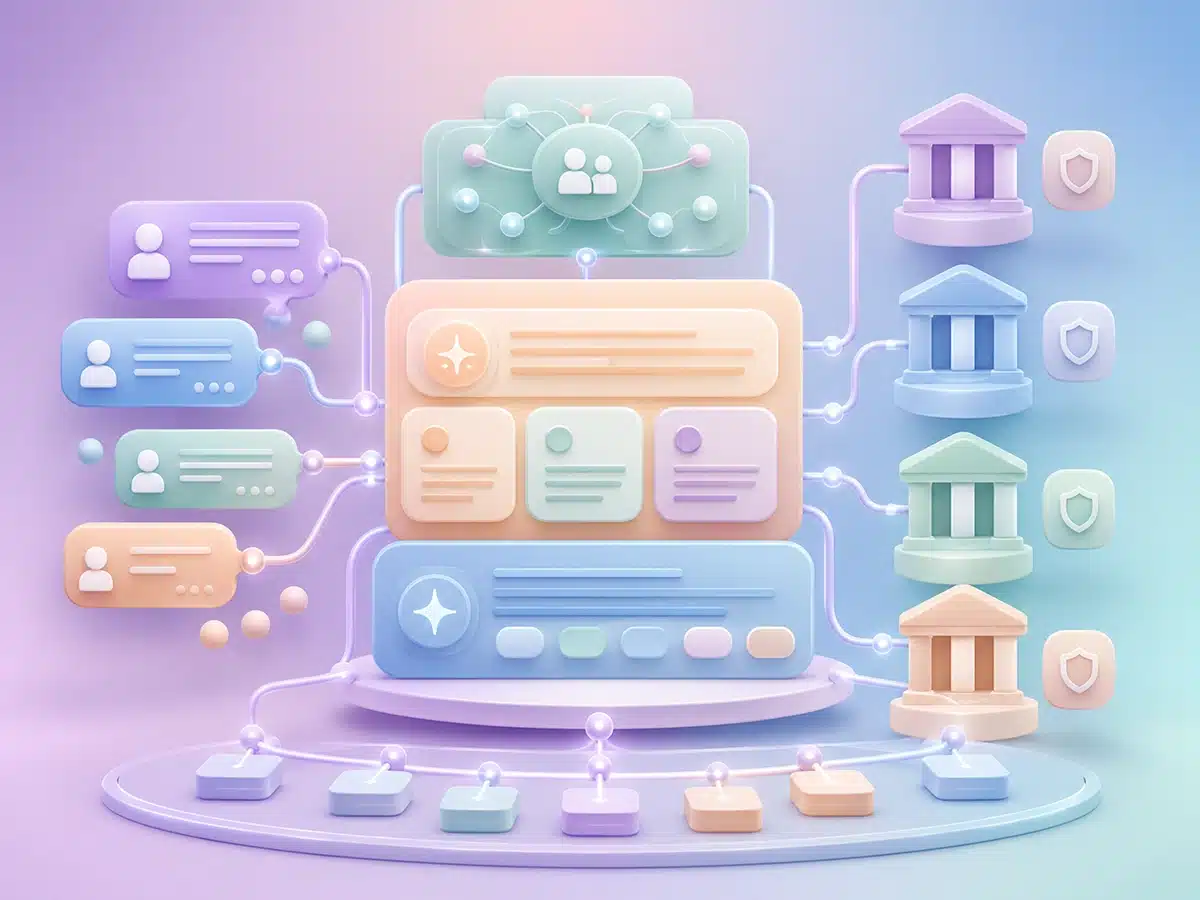
Keep in mind that everything we have covered up to this section could change tomorrow, since Zero-Click Search is still evolving, and these features could expand even further. AI Overview itself is likely just an early step, with Google’s AI Mode waiting in line to provide a more conversational experience where users can ask follow-up questions. This shift is not limited to typing, since the same conversational approach is showing up in how we speak to search engines through voice assistants.
More evolving features may still be on the way. Hence, adapting your content to follow this conversational format will help you stay relevant beyond the current SERP landscape.
Wrapping Up
Once you start working to get cited by Zero-Click Search, your job goes beyond writing good content. It also means building your brand visibility and maintaining your niche authority. Doing so is proof that you are ready to adapt to the future of SEO.
You are right if you think earning this requires time, strategy, and continuous optimization to see real results. But if you are not gonna start now, then when? With a dedicated team from KUMO Studio, we will help your brand to get more visibility to strengthen your online presence.
Partner with KUMO Studio and let’s take a spot on Zero-Click Search for your website. Get in touch today!
Ready to bring your goals to life?
