

Anchor text may look small, but a single phrase in a link has the power to shape how both users and algorithms see your page. It acts as the bridge that connects one piece of content to another, and when it’s sprinkled naturally throughout your content, it helps drive rankings and build your online reputation.
But the tricky part is that this tiny detail can also create big problems when misused. Keyword stuffing or overly optimized linking strategies can do more harm than good, often triggering penalties and dragging down your visibility. So in this blog, we’re breaking down how to use anchor text strategically to boost your SEO without crossing the line into over-optimization.
- What Exactly is Anchor Text?
- Types of Anchor Text You Should Know
- Why Anchor Text Optimization Matters
- The Danger of Over-Optimization
- Best Practices to Optimize Anchor Text Safely
- Internal Linking and Anchor Text: A Strategic SEO Tool
- External Links and Natural Anchor Distribution
- Small Details but Big Impact
What Exactly is Anchor Text?
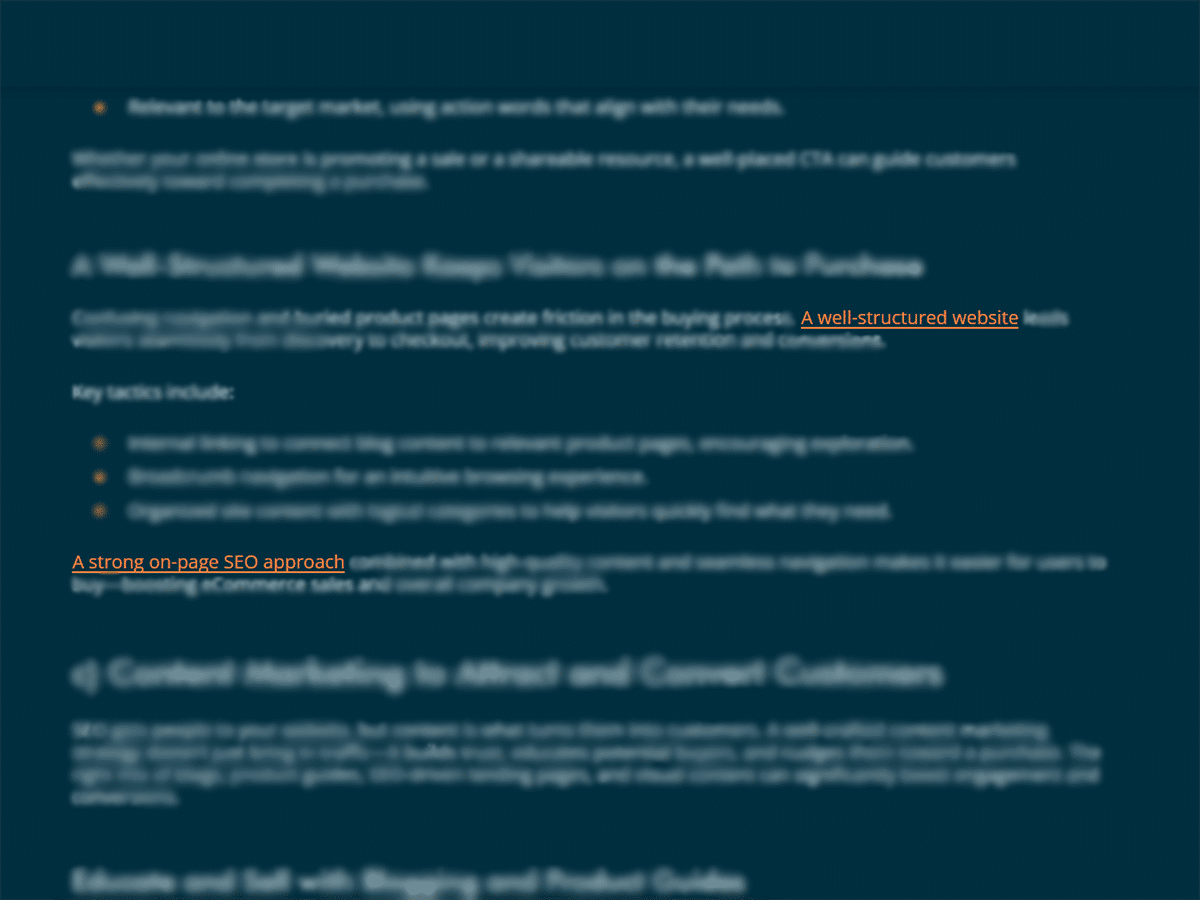
The clickable, visible part of a hyperlink, or the text people actually see and interact with, is what’s called anchor text or link text. It's usually styled to stand out, often underlined or colored to signal that there’s something valuable on the other side.
Let’s say you’re linking to a blog about eCommerce SEO. Using actual anchor text like "eCommerce SEO" adds clear context and creates a smoother reading experience. Readers can explore related information without needing to leave your blog or search for it themselves, keeping everything connected and easy to follow.
This small piece of clickable text also gives search engines clues about the linked page and how it ties into the rest of your site. For example, if you link using the phrase "small SEO tools," it signals to search engines that the destination page is related to search engine optimization (SEO). That kind of context helps distribute SEO value to the right places within your content. So, it's small SEO details that play a big role in improving relevance and rankings.
Types of Anchor Text You Should Know
In fact, not all link text hits the same. The words you choose to link can signal different things to both users and search engines. Here's a breakdown of the main types of anchor text and how each one works:
1. Exact Match
Exact match anchor text uses the exact keyword you’re trying to rank for, with no added words. So if your keyword is digital marketing campaign, then your anchor text is simply "digital marketing campaign."
This type can be effective for signaling to search engines what the linked page is about, but it needs to be used sparingly. Too many exact matches or excessive link text across your content can come off as spammy, which search engines would interpret as a form of black hat SEO tactics.
2. Partial Match
Partial match anchor text includes your target keyword, but it’s combined with other words that make the sentence flow more naturally. Something like "tips for better eCommerce SEO" still includes the keyword, but it is incorporated in a longer sentence. Partial match anchors are great for creating natural anchor text that strikes a balance between optimization and readability. They help guide search engines while sounding like something a real person would actually say.
3. Branded Anchor Text
Branded anchor text simply uses your brand name as the link. For example, if Semrush links to one of their own blog posts or their homepage, they’ll likely just use Semrush as the anchor.
This type is great for building brand awareness and authority. It’s clean and doesn’t trigger any SEO concerns with search engines. Plus, it helps reinforce your brand identity across different pages and platforms, such as when you’re linking internally or getting mentioned by other sites.
4. Generic Anchor Text
Generic anchor text includes phrases like "click here or read more." These don’t tell search engines much about the page you're linking to, but they can still be helpful for readers, especially when the context around the link is already clear.
Take this sentence: "We’ve covered best practices of paid search here." It’s not optimized for keywords, but it works because the sentence itself tells the reader what to expect. While generic anchors don’t offer direct SEO value, they can improve the user journey when used strategically and in moderation.
5. Naked Anchor Text
A naked URL is when the anchor text is literally just the full web address, like "https://kumostudio.co/". This style is more common in footers, citations, or sources, where the goal is simply to reference or direct to a specific page. It’s best used when there's no need for additional context or when you want to show the destination link clearly.
6. Image Alternative Text
When you use an image as a hyperlink, search engines can’t read the image itself, so they rely on the image’s alt text as the anchor. This means whatever you write in the image’s alt attribute becomes the anchor text.
It’s an often-overlooked detail, but one that can improve both your SEO and accessibility. The pro tip is to make sure the alt text describes what the image links to, not just what’s in the image. That way, you're giving search engines helpful context and supporting users who rely on screen readers.
Why Anchor Text Optimization Matters
In a nutshell, optimizing anchor text is about choosing link words or phrases that are natural and relevant. It should help both visitors and search engines understand what the linked page offers. When done well, this makes your site easier to navigate and helps spread ranking value across pages. The main point is to keep link text clear and connected to the surrounding content so it fits smoothly within the reader’s experience.
Google’s 2025 Link Spam Update has made it clear that any overuse of keyword-heavy anchors in both internal and external links, as well as manipulative linking can lead to penalties and reduced visibility. The algorithm now digs deeper into the intent and context behind each link, aiming to detect and ignore patterns that feel unnatural or forced.
Even if your content is solid, unnatural anchor text distribution can result in links being devalued or ignored entirely. This means your link text should be varied and balanced, mixing brand names, generic phrases, and exact keywords to create a profile that is organic and trustworthy.

The Danger of Over-Optimization
Over-optimization happens when the intent behind linking shifts away from helping the user and focuses too much on pleasing search engines. When that happens, it starts to work against you—much like when you ignore SEO practice.
This kind of over-optimization often shows up in a few ways:
- Excessive exact-match keywords: Repeating the same keyword phrase multiple times in page content, anchor text, or metadata just to rank for that term. For example, constantly using “search engine marketing” in content or links without variation or context leads to keyword stuffing, which can feel spammy to users and search engines.
- Unnatural internal linking: Overloading a page with keyword-rich internal links that don’t add real value can disrupt the user experience. When they aren’t guiding readers to genuinely helpful or related content, they start to sound robotic and forced.
- Repetitive backlinks: If multiple external sites link to the same page using the same keywords or phrases, this triggers spam filters in search engines and reduces the authority of those backlinks.
What’s tricky about over-optimization is that it’s not always obvious. You might think you're following SEO best practices by reinforcing keywords or linking between posts. But if the strategy lacks variety or feels disconnected from the surrounding content, it raises red flags for Google and your users.
The impact of over-optimization can derail your efforts:
- Search engines may devalue your links: Search engines may ignore or devalue links that appear manipulative, even when they come from trusted or high-authority sites. This weakens the SEO value of your linking strategy.
- Pages can lose visibility: Over-optimized pages risk being filtered out of search results or penalized for spam signals. Google’s algorithms are designed to prioritize the most genuine and useful content, so spammy SEO tactics can harm your rankings drastically.
- Readers start to lose trust: When links feel forced or interrupt the natural flow of your content, readers notice. That loss of authenticity can lead to lower engagement, higher bounce rates, and reduced brand credibility, all of which can impact both SEO and business performance.
Best Practices to Optimize Anchor Text Safely
Below are a few best practices to help you optimize anchor text safely and strategically:
1. Mix Anchor Text Types
Don't stick to just one approach. Use a mix of exact match, partial match, branded, and generic anchors across your site. This creates a more natural and trustworthy link profile. One blog post might link to sustainable fashion brands, another might say "explore our favorite eco-friendly wardrobe picks" (partial match), and another could just use the brand name like "LUNA Apparel" (branded anchor text).
2. Avoid Keyword Stuffing
When links are packed with keywords just for the sake of ranking, it starts to feel robotic and unnatural. Instead of forcing one keyword and spreading it to every paragraph of your content, use variations that feel natural to the way you write. Let the keywords blend into real sentences that serve your readers first.
3. Integrate Links Into Full Sentences
Anchor text should sit comfortably in the flow of your content. A sentence like "Learn how to build a content calendar that actually works" is easier to read than one that simply drops "content calendar" into a line with no context. If the link feels smooth when you read it out loud, you're on the right track.
4. Match Anchor Text With the Linked Content
Your anchor text should clearly reflect the content it leads to. When someone clicks a link, they should land on a page that delivers exactly what the link promised. For example, if the anchor says "white hat SEO", the linked page should actually explain what white hat SEO is. Keeping your links consistent and relevant builds trust and makes your content easier to explore.
5. Use Clear and Concise Alt Text for Linked Images
When an image links to another page, the alt text acts as the anchor text for that link. Make sure it clearly describes what the image represents and where the link leads. Avoid stuffing it with keywords and keep it short, as well as relevant.
Internal Linking and Anchor Text as a Strategic SEO Tool
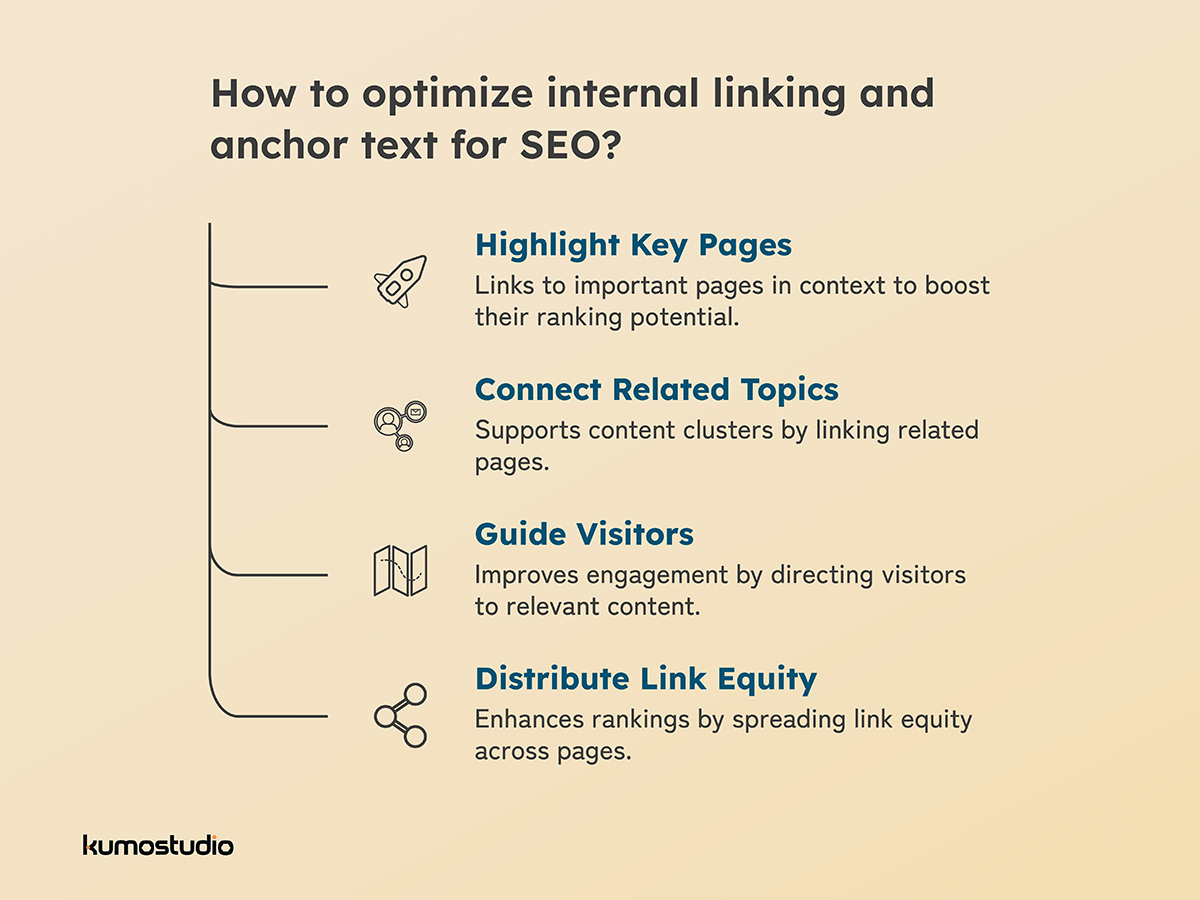
As part of on-page SEO, internal linking is the tactic that connects one page of your website to another through hyperlinks. It helps you pass along page authority (also called link equity) and boost the ranking potential of important content. On top of that, it gives your website a logical structure that makes it easier to navigate and also for search engines to understand.
Now, when internal linking is paired with well-optimized link text, that’s where things really start to click. Together, they create a powerful synergy that strengthens both SEO performance and user experience. Here are the benefits when your internal anchor text is done right:
- Highlights key pages by linking to them in the right context.
- Connects related topics and supports content clusters.
- Guides visitors to more relevant content, improving engagement.
- Distributes link equity across pages to support better rankings.
To maintain a strong internal linking structure, it’s worth auditing your site regularly. Tools like Screaming Frog and Sitebulb can help identify overused anchor phrases, broken internal links, or pages that aren’t being linked to at all. These insights allow you to fine-tune your internal links so they continue supporting both SEO and usability.
External Links and Natural Anchor Distribution
Unlike internal links, where you have full control over the anchor text, external links are a little more unpredictable. When other websites link to your content, you can’t always choose the exact words they use. That’s why external anchor text tends to vary more and why it’s important to build a natural, balanced backlink profile over time.
That said, you still have some influence, especially during outreach or digital PR campaigns. If you're doing guest posts, collaborative content, or link-building through partnerships, it's best to steer clear of keyword-heavy or overly optimized anchors. Repeatedly asking for exact-match keywords can raise concerns with search engines and make your backlink profile look manipulated.
Instead, focus on branded anchors or contextually relevant phrases that fit naturally within the linking page. For example, a link that says "learn more about technical SEO best practices" or "explore this SEO guide" reads more naturally and signals genuine relevance to search engines. In contrast, using exact-match anchors like “technical SEO best practices guide” or repeating keyword-heavy phrases can appear manipulative and negatively impact how search engines evaluate the link.
To keep track of your external anchor text profile, use tools like Ahrefs, Semrush, or Majestic. These platforms let you monitor the link text associated with your backlinks, spot unnatural patterns, and adjust your outreach strategy accordingly. The aim is to keep your anchor distribution varied, not overly reliant on one type of phrase or keyword.
Small Details but Big Impact
Anchor text might seem minor at first glance, but it can significantly impact how your website ranks in search results. When it's over-optimized, search engines may interpret your links as unnatural or spammy, which can slow down your site's growth. The key is to use a balanced mix of anchor text types across your pages and make sure they align naturally with the content you're linking to.
If you're looking to strengthen your SEO strategy, KUMO Studio has you covered. We’ll ensure your site stays aligned with search engine guidelines and optimized for long-term results. Let’s connect and start building smarter pathways to online success.
- Categories:
- Search Engine Optimization (26)
Ready to bring your goals to life?
