

What is Local SEO? Tips to Improve Your Local Search Rankings
Author: KUMO Studio
Local SEO is a way to help your business appear in search results when people are looking for services around them. In this decade, when someone opens a new business or offers a service, potential customers will most likely discover it through Google searches. Because of this habit, local SEO has become an important part of building online presence. Let’s get to know local SEO better, along with a few tips to optimize it so your business shows up when nearby customers need it.
What is Local SEO
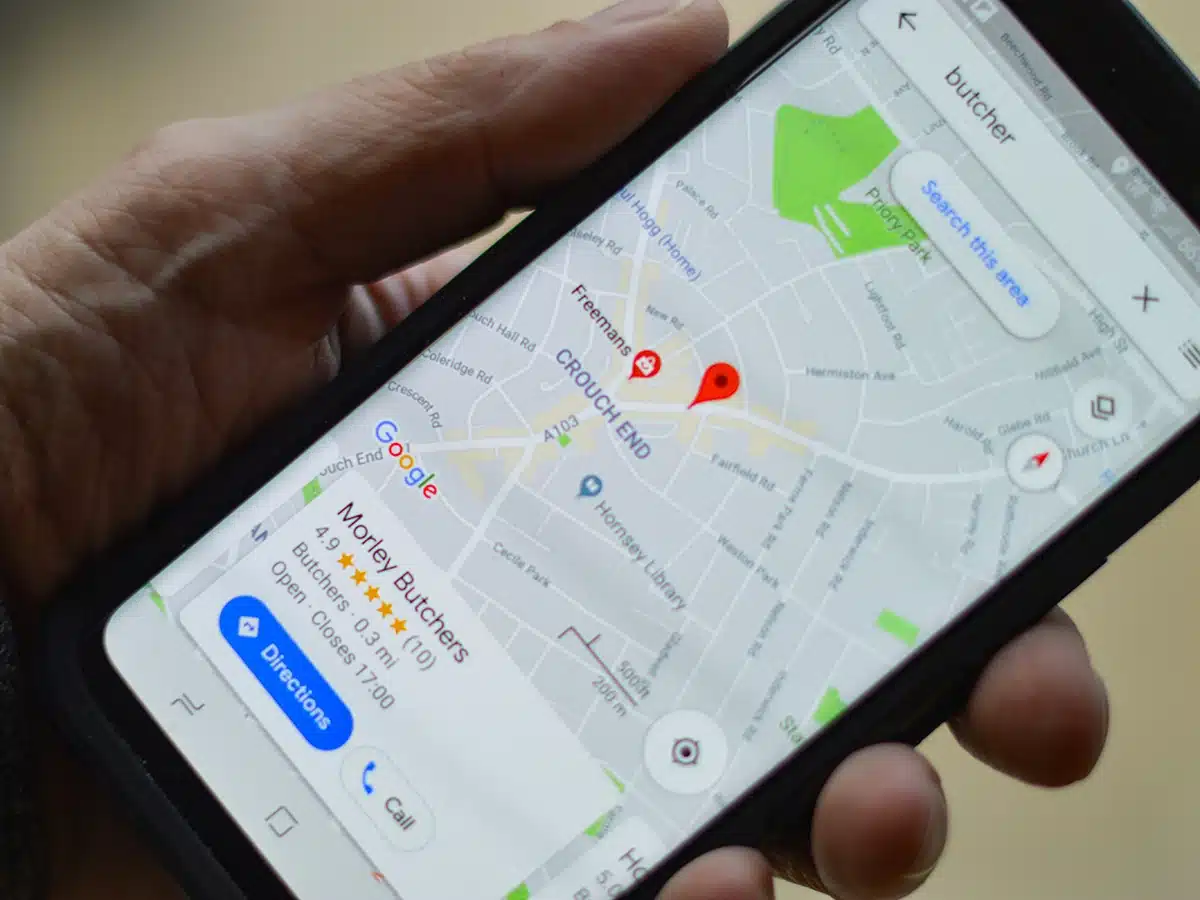
Local SEO focuses on improving visibility for businesses within a specific geographic area. It is commonly used across digital platforms such as your website, Google Business Profile, online directories such as Google Maps, and even your social media pages. So when someone searches for a service in their area, these platforms step in to connect them with businesses that are right around the corner.
While Local SEO follows many of the same principles as traditional SEO, the difference lies in how search queries reflect location intent. Instead of generic searches, people often include location signals like mentioning a specific place or simply searching for something nearby. In practice, these searches often look like this:
- “plumber in Brisbane” or “best cafe in Sydney.”
This is called location keywords when searches directly mention a place (Brisbane and Sydney) - Someone in Melbourne is searching “hair salon near me.”
These searches sometimes don’t include a city name. But they rely on implicit location intent (near me), which signals to Google that the user is looking for businesses nearby.
How Local SEO Works
Try searching for a local service on Google and you’ll notice it’s not just a single list of results. Once Google detects local intent, it pulls information from across its ecosystem to surface the most relevant nearby businesses. Typically, these results show up in five main areas:
1. Google Business Profile
Google Business Profile (GBP) appears on search engine results pages (SERPs), often alongside organic results, or within Google Maps. It serves as a business listing that displays key information like your business name, address, phone number, website, photos, operating hours, and customer reviews. Since it’s free and fully integrated with Google Search and Maps, GBP is one of the easiest and most effective ways to help your business get discovered online.2. Local Pack
This section appears near the top of Google search results and typically shows a map along with three highlighted business listings. It consists of key information such as the business name, ratings, location, category, and operating hours. Local pack is also one of the most competitive in local search because only three businesses are prominently displayed, while others require users to click “More places” to view additional listings.
3. Local Finder
When users click “More places” in the local pack, they are taken to the local finder, where they can explore a more detailed list of local business results related to their search.
4. Google Maps
Users can also click on the map shown in the local pack or local finder to open Google Maps. From there, they can explore nearby businesses and select a listing to view its GBP with more details.
5. Organic Results
Below the local pack, Google still displayed traditional organic search results. These typically include business websites, blogs, and landing pages that are optimized with location-based keywords or ranked based on relevance and location signals.
Why Local SEO Matters for Businesses
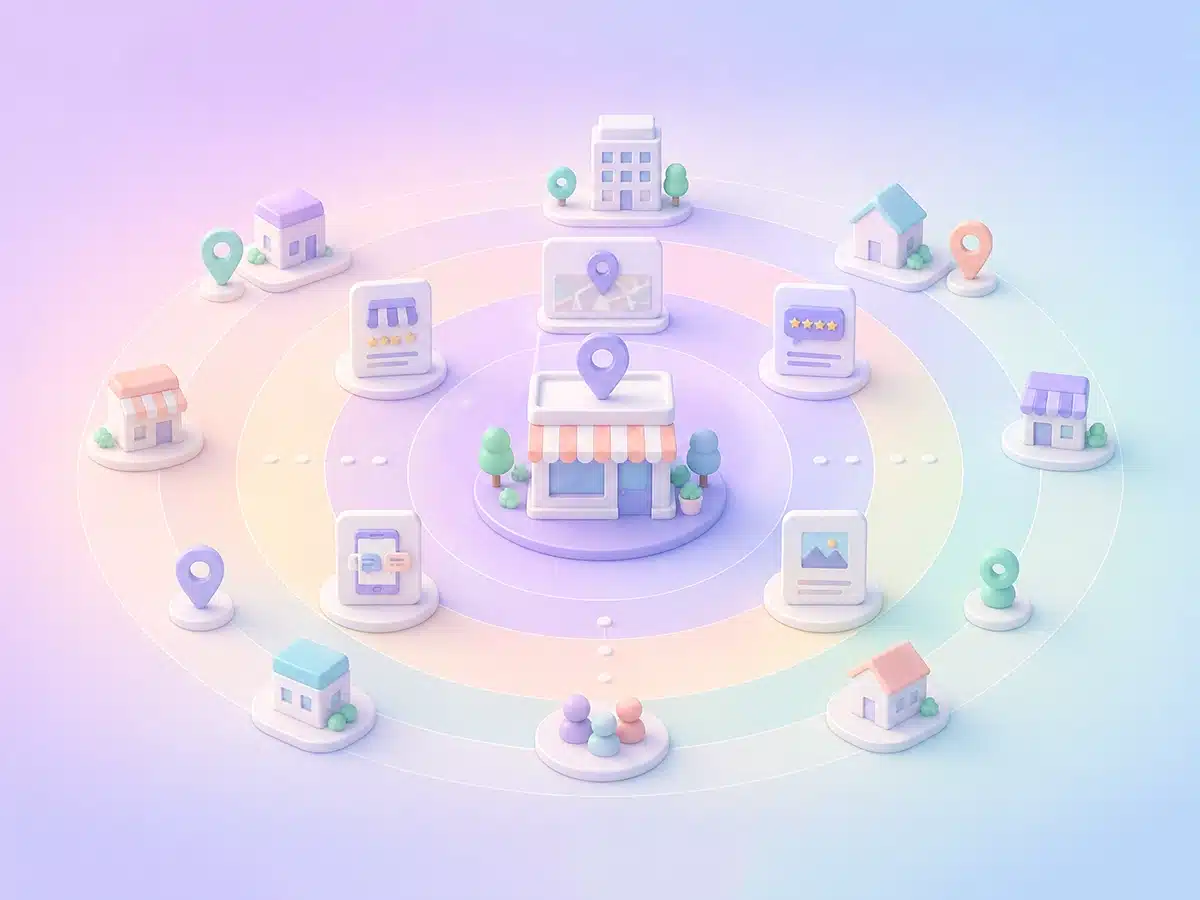
According to Google, customers are 2.7 times more likely to consider a business reputable if they find a complete Business Profile on Google Search and Maps. This shows how Local SEO, even through something as simple as optimizing your GBP, can build trust. Especially in today’s competitive landscape, local customers tend to choose businesses that are easy to find and appear trustworthy. So improving your Local SEO, whether you run a small business or manage multiple locations, gives you two benefits: stronger local search visibility and greater credibility to attract your target audience.
Other than that, the data also shows that customers are 70% more likely to visit and 50% more likely to consider purchasing from businesses with complete profiles. The reason is that search engines connect your business with high-intent users who are already close to making a decision. This makes it easier to turn those searches into real actions, driving both website traffic and foot traffic from people who are ready to engage.
Step-by-Step Guide to Building a Strong Local SEO Strategy
One thing to keep in mind is that local SEO isn’t something you can shortcut with paid rankings. Google's tips to improve your local ranking make it clear that businesses cannot pay to improve their position in local search results. It’s part of how they keep things as fair as possible for everyone.
Alternatively, local search rankings are determined based on three main factors: relevance, distance, and prominence. To understand how these local SEO tactics work, here are the steps you can take:
Step 1: Optimize Your Website With Local Keywords
Just like traditional SEO, you can start with the basics by optimizing local keywords across your website and other online platforms. Local keywords are search terms that include specific locations, such as cities, neighborhoods, or even phrases like “near me,” which people commonly use when looking for products or services nearby.
You can do keyword research with tools such as Semrush, Ahrefs, or Google Keyword Planner. These keywords can then be naturally incorporated into on-page SEO elements like your meta title, meta description, headings (H1, H2), and main content. If your business operates in multiple locations, it is recommended to create separate pages for each area and put location-based keywords in the URL (slug). This helps search engines better understand your geographic relevance and improves your chances of ranking in local searches.
Let’s take the example of a plumbing service called "ProFix Plumbing" that operates in both Sydney and Melbourne. They can add location-specific URLs like profix-plumbing.com/sydney and profix-plumbing.com/melbourne. With this, search engines can better identify each service area and help users find the most relevant page based on their search and location.
Tips to keep in mind: Avoid overusing keywords, as this can come across as keyword stuffing and may hurt your rankings. Also, make sure to have unique and relevant content when creating multiple location pages. Reusing the same content across all pages can make search engines think they are duplicates and make your own pages compete against each other (keyword cannibalization).
Step 2: Optimize Your Google Business Profile
Relevance is all about how well your business matches what someone is searching for. Improving it starts with making sure your GBP is fully optimized with complete and accurate details, including your business name, address, phone number, operating hours, and images.
You can also select the most appropriate primary and secondary categories to help Google clearly understand what your business offers. Imagine you run a coffee shop where people love to settle in and get work done. In that case, you could set “coffee shop” as your primary category and “co-working space” as a secondary one, along with other relevant options that reflect what you offer.
Step 3: Keep Your Business Information Consistent
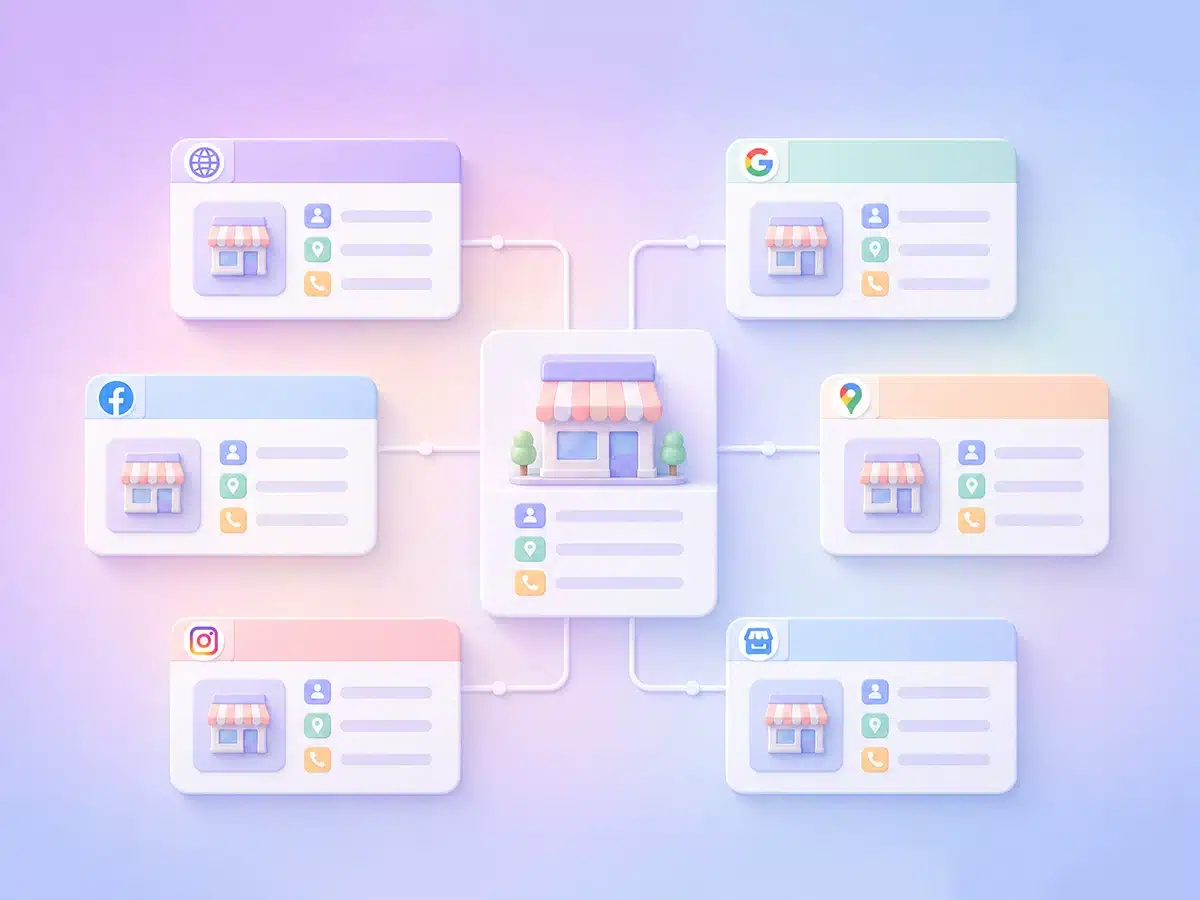
Keep your Name, Address, and Phone Number (NAP) consistent across directories, social media, and your website so customers don’t get confused when they’re ready to contact or visit your business. Your address is especially important for local results. If a user doesn’t share their location, Google relies on available signals to figure out where they are and what’s nearby. That said, the more accurate and complete your address is, the easier it is for your business to show up in the right local searches.

Step 4: Encourage Customer Reviews
Don’t hesitate to ask satisfied customers to leave reviews on your GBP and other relevant platforms. Reviews are an important part of local SEO, especially for prominence, which considers both the number and quality of reviews. You can respond to both positive and negative reviews to show that your business is active. And if done consistently, it can improve your business’s visibility in local search over time.
Step 5: Build Local Backlinks
Local backlinks are also part of prominence, which looks at both the number and credibility of websites linking to your business. You can earn these links through local partnerships, directories, news sites, blogs, or even content creators in your area. So if a local food blogger in Melbourne features your cafe on their website, or a local news site mentions your business in an article, those links help strengthen your connection to that location.
As you earn more backlinks, search engines are more likely to see your brand as trustworthy and gradually improve your visibility in local search results.
Let's Turn Local Searches Into Real Customers
For businesses such as brick-and-mortar stores, service-based firms, or local agencies, local SEO is key to being discovered by potential customers. Without it, you may not realize that every day opportunities slip away as customers who should come to your business choose competitors instead.
If handling Local SEO feels like it takes up too much of your time or you’re not sure where to start, you can always turn to KUMO Studio. We build strategies that make your business easier to find in local search and turn that visibility into real results. Reach out to us today and let’s make local search work for your business.

Ready to bring your goals to life?
